Orthopaedic aids: stability, relief and safety in everyday life
To help you get back to your everyday life free from pain, whether you’re suffering from chronic pain, recovering from an injury or following surgery, we offer high-quality orthopaedic aids in Dietikon, such as bandages, orthoses and compression stockings – including personalised advice and individual fitting.
Which aid is best for what, and when?
The choice of aid always depends on the type of injury, the healing process and the individual’s needs.
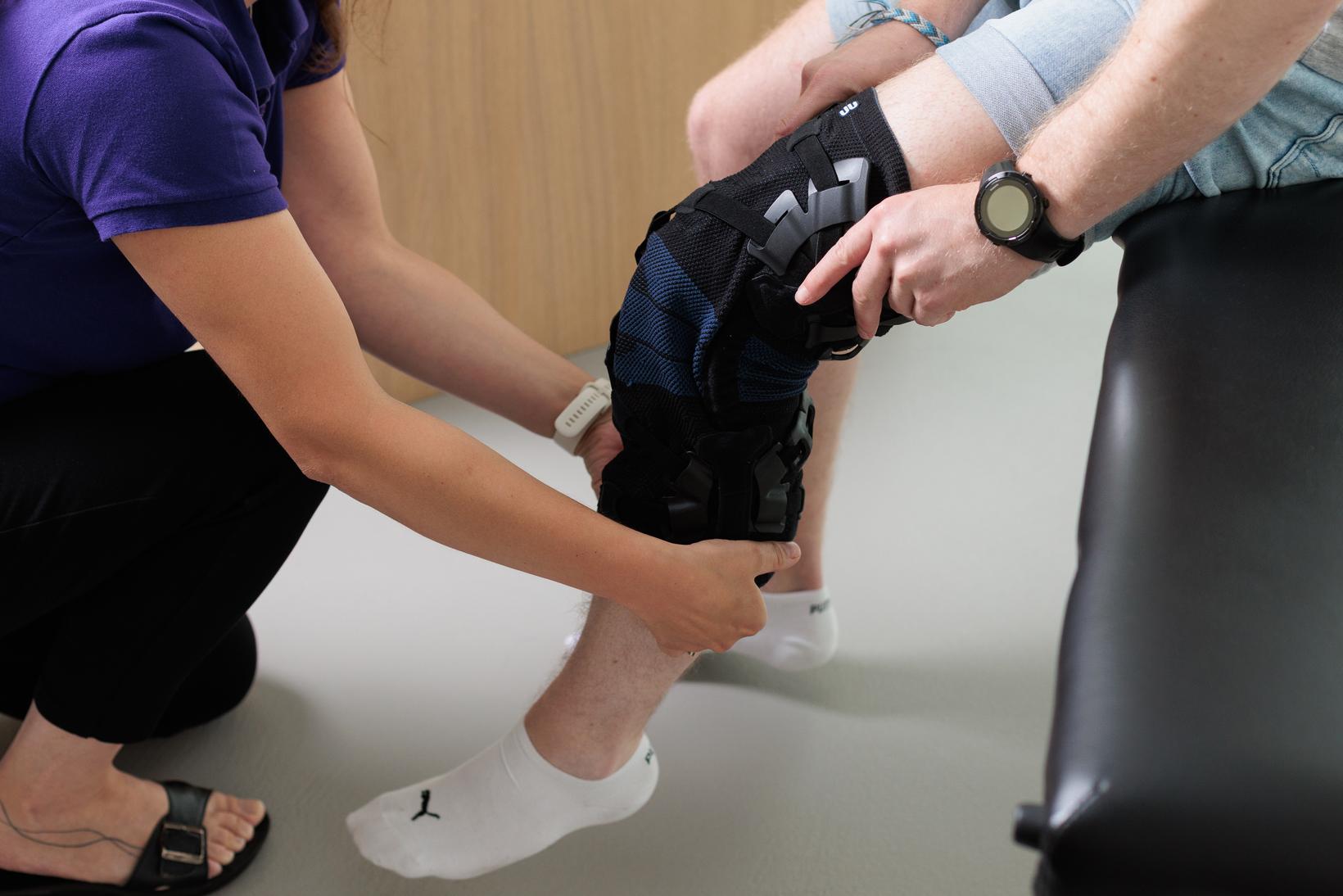
Orthoses, usually following bone fractures
Following a bone fracture, a plaster cast is often applied as a first step to completely immobilise the affected area of the body. During the subsequent healing phase, braces are usually used: they provide targeted stabilisation of joints and body parts, protect the injured tissue and, at the same time, enable a controlled return to movement.
An orthosis is an externally applied device designed to influence the structural and functional properties of the neuromuscular and skeletal systems. Orthoses are primarily used when an affected joint requires guidance, stability or a partial or complete restriction of the range of motion in certain directions.
Whether to prevent injuries to ligaments, tendons, joints or muscles, or to relieve or stabilise the musculoskeletal system: our specialist advisers will help you choose the right orthosis and ensure it is optimally tailored to your needs.
Once the healing process has progressed further, a support bandage may be advisable.
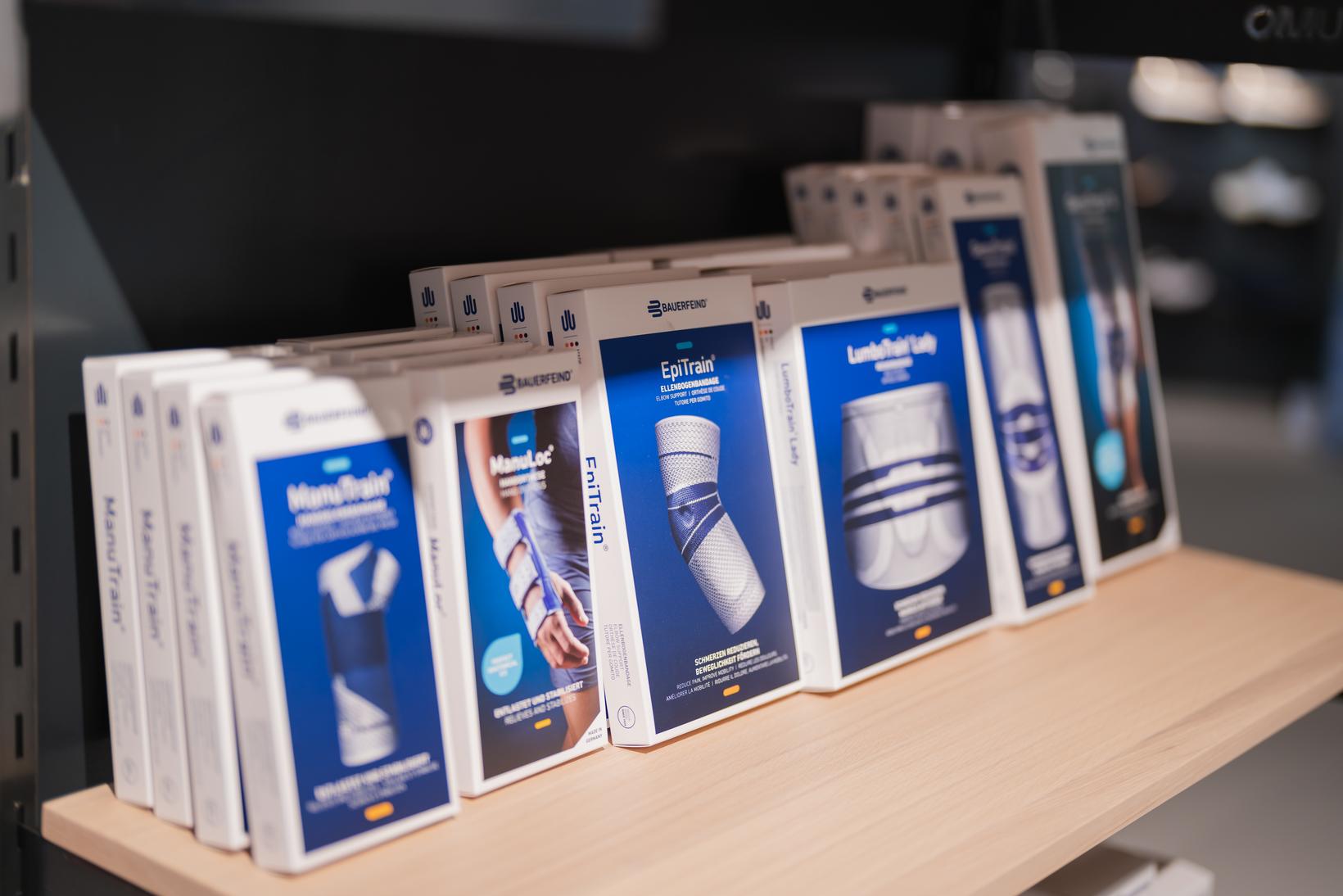
Bandages for instability, strain or for support
These elastic and flexible supports are often used to treat instability, overuse or to provide support during sport. Whether for the ankle, knee, spine, hand, elbow or shoulder: when joints are painful, active supports help to relieve the discomfort. Active supports are made from a stretchy, breathable knitted fabric with elastic moulded inserts.
They provide support and massage the joint without restricting mobility. This stimulates blood circulation and aids the healing process. They are easy to put on and do not constrict. The gentle compression can reduce swelling and prevent the spread of oedema. It also stimulates neuromuscular functions through what is known as the proprioceptive effect.
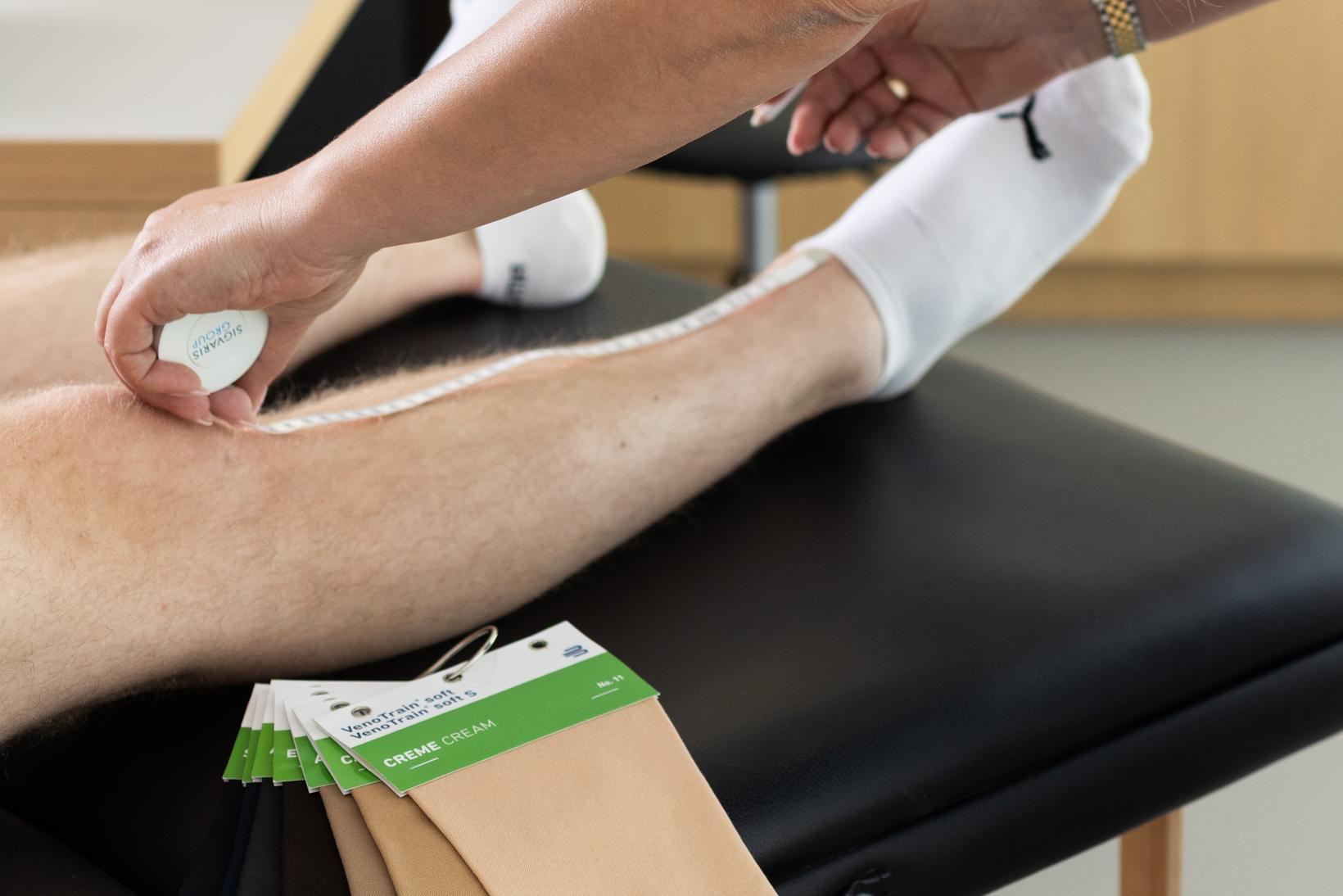
Compression stockings for venous disorders, thrombosis or lipoedema and lymphoedema
Compression garments are also among the most important orthopaedic aids. They promote blood circulation and are used, for example, to treat venous disorders, following thrombosis, or in cases of lipoedema and lymphoedema. Depending on the medical condition, either circular-knit or custom-made flat-knit compression stockings are used.
Compression stockings help prevent or support the treatment of tired and heavy legs, varicose veins, and more severe venous diseases. Compression stockings are available in various designs, colors, and compression strengths.
Depending on your needs, we offer ready-made models in your size or custom-made ones. To make your therapy as pleasant as possible, we offer a comprehensive range of compression stockings as well as a wide selection of accessories, extras, and aids for putting them on.