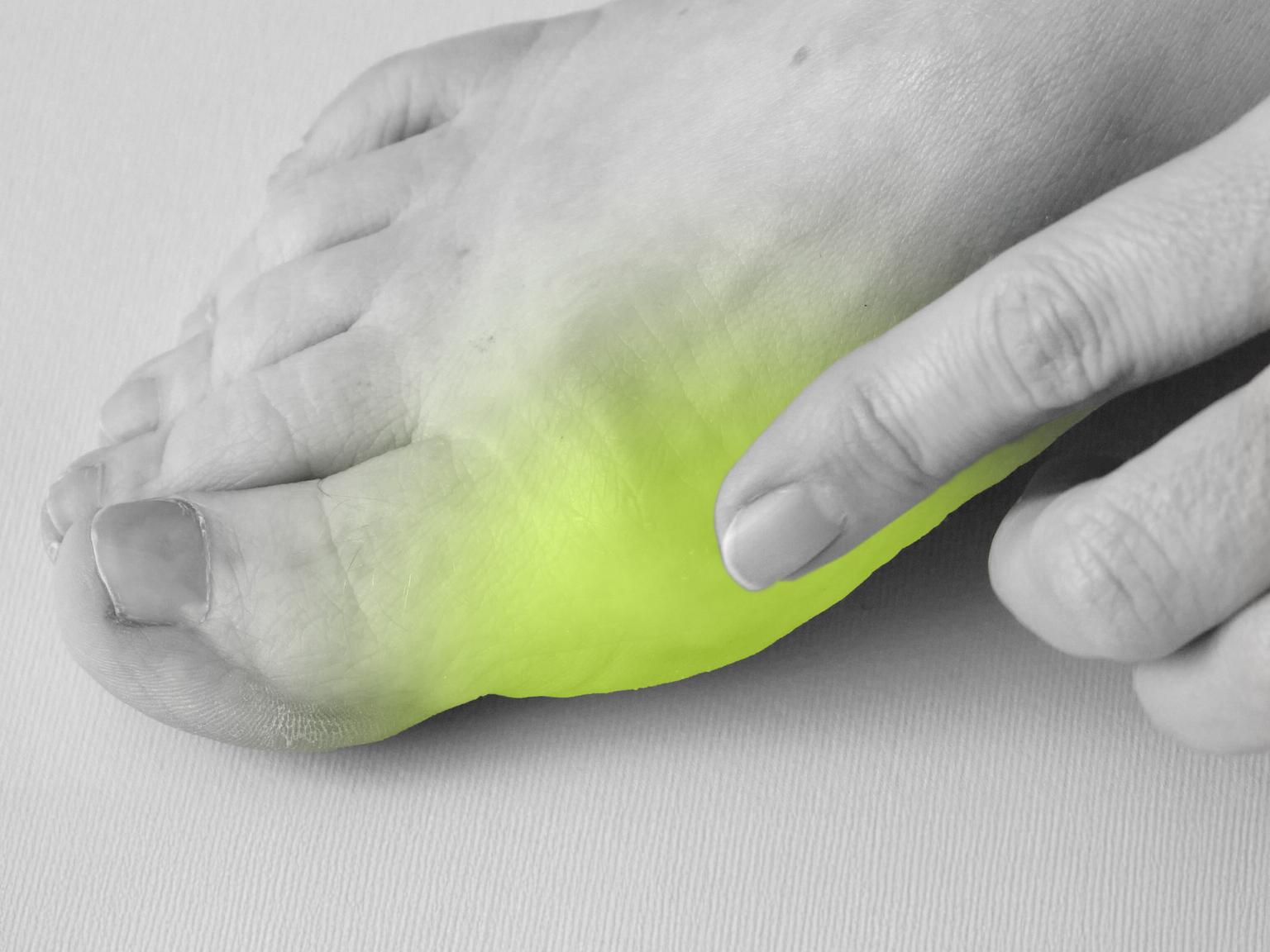
Do you have a hallux? Congratulations! Hallux is the Latin term for big toe. It would be a shame if you didn't have a hallux. In common parlance, the term hallux is mistakenly used for the condition hallux valgus. Valgus means a misalignment with a bend of the joint axis towards the body's center. In hallux valgus, the MTP1 joint (located between the first metatarsal bone and the big toe) bends inward, while the big toe deviates laterally, away from the body's center.
These are the causes of a Hallux valgus
The causes of a Hallux valgus are varied and often complex. Influences from foot misalignments such as a splayfoot or a flatfoot are discussed. Joint diseases such as rheumatoid arthritis or obesity, as well as frequently wearing shoes that are too tight or have high heels, can also be risk factors for a Hallux valgus. Family predisposition also has a significant influence. An inherited connective tissue weakness promotes the development of a Hallux valgus.
Hallux valgus: Symptoms and mechanism
Usually, a Hallux valgus does not cause pain, which is why no treatment measures are often taken. However, this can backfire later. In the dynamic foot pressure measurement in Figure 1 (left), increased pressure on the big toe during rolling is visible. The direction of pull of the tendon of this muscle runs somewhat laterally, meaning sideways (Figure 1, right). This pulls the toe more into the crooked position.
The head of the first metatarsal bone bulges more and more with increasing Hallux valgus. The nerve running over this metatarsal bone can be irritated in the shoe. As a result, numbness, pain, and burning of the big toe can occur.
Due to the misalignment of the Hallux valgus and the underloaded big toe joint, the adjacent second metatarsal bone is chronically overloaded (Figure 1, red spot in the middle of the forefoot). This can lead to complaints in the forefoot, a so-called transfer metatarsalgia.
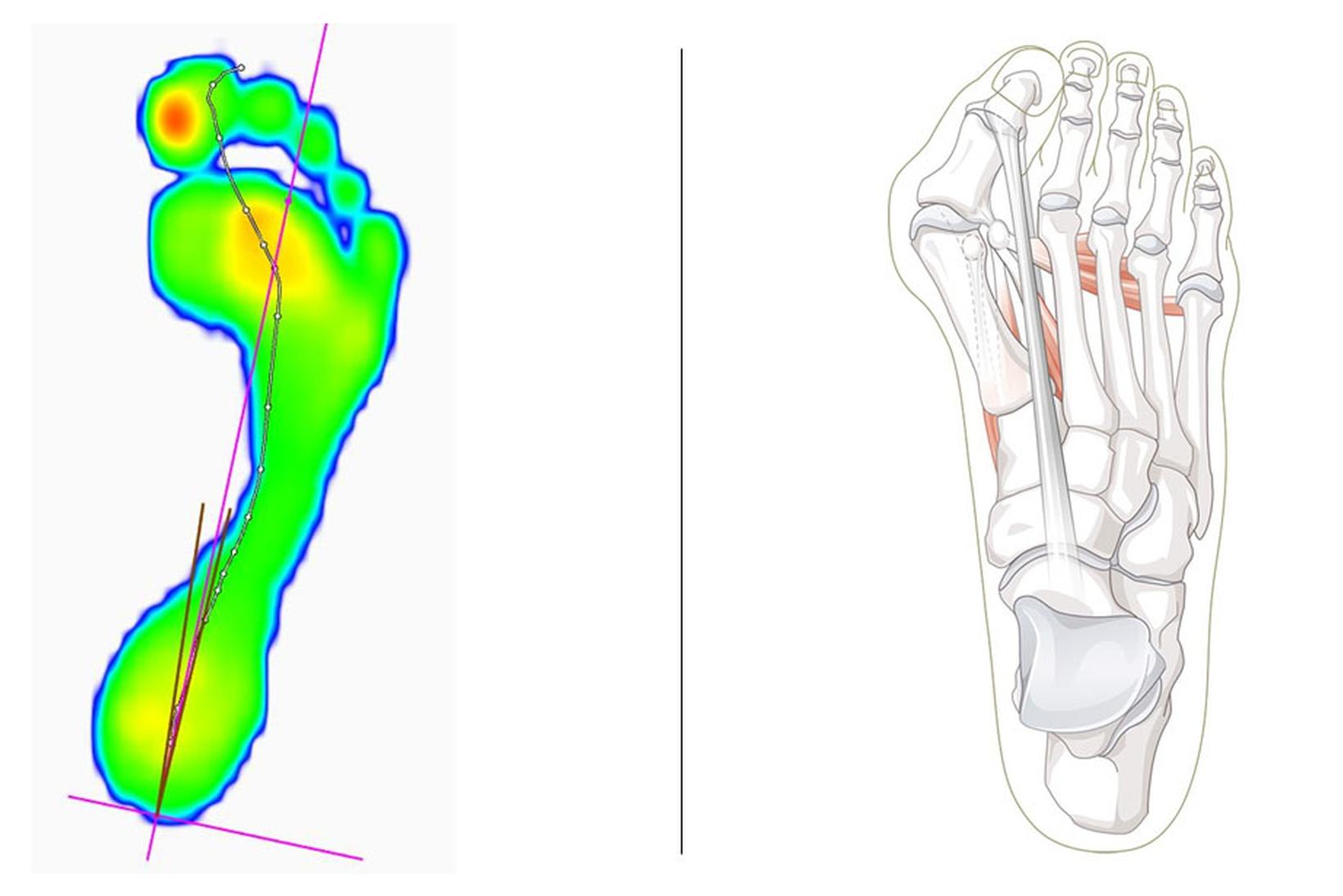
Figure 1: Left: Dynamic foot pressure measurement. Right: a Hallux valgus.
Progression of a Hallux valgus
Initially, the Hallux valgus is still movable. However, over time, the big toe joint can stiffen. This can lead to osteoarthritis in the joint, resulting in a Hallux rigidus (stiff big toe joint), which leads to increased complaints. The further the Hallux valgus progresses, the more the big toe presses on the second toe. Pressure points and increased misalignments develop.
What can I do about a Hallux valgus?
If you notice an (incipient) Hallux valgus in yourself, you should react early. As we have seen above, the big toe joint is still quite movable at the beginning. Therefore, there are the best chances to make a difference, for example, with foot gymnastics, the right shoes, and a corrective insole as needed.
With a NUMO insole, we achieve improved pressure distribution in the forefoot through different corrective elements. We apply more pressure on the big toe joint, which is often underloaded in Hallux valgus symptoms, and thus relieve it again.
Shoes: It is important to choose sufficiently wide shoes with enough space or volume in the forefoot – as well as a stiff sole with good rolling.
Foot gymnastics: Regular exercises can help alleviate complaints. (Book tip: "Good on Foot for a Lifetime" by Christian Larsen)
Hallux valgus splint: A Hallux valgus splint is suitable at night to relieve the joint capsule.
Toe wedges: Toe wedges can provide relief for pressure points between the toes.
How NUMO helps with a Hallux valgus
The right insoles help with existing foot deformities, such as the sinking of the longitudinal arch. Insoles also provide relief for incorrect pressure distribution. We conduct a comprehensive gait and walking analysis with you and find the right insoles for your foot.