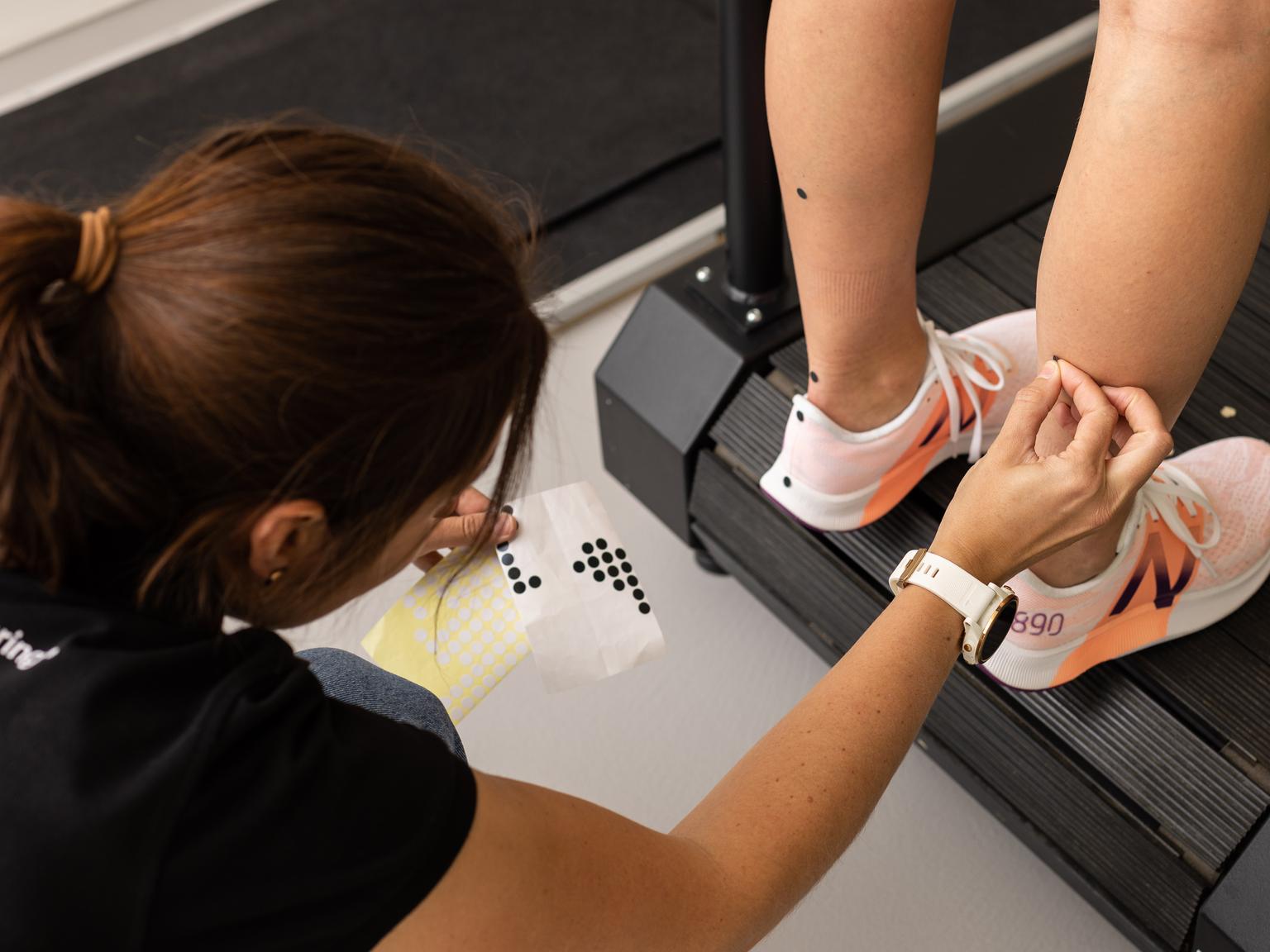
Have you already started the running season? What shoe are you wearing? Neutral shoe, medial support shoe, rocker, carbon shoe, barefoot shoe, U-Tech shoe, high or low drop, a lot or little cushioning? Have you found your optimal running tool yet? Does it even exist?
Choosing the right running shoe can be challenging. There is a huge selection. How are you supposed to find your way around? At the latest, when discomfort occurs while running, it is advisable to think about the shoe in addition to running technique, physical condition, running intensity, and running volume.
For example, a running shoe with an insufficiently stable sole can cause foot pronation, even though the heel is neutral to the ground when barefoot. Over time, this can lead to discomfort in the lower extremities.
What does the science say?
According to a review article, on average, 37% of runners experience discomfort in the lower extremities, particularly in the knee, lower leg, or Achilles tendon. For years, countless (more or less) scientific studies have been conducted to understand the biomechanics of running and their impact on injuries. The range of statements is vast and often controversial.
Two main differences between running shoes concern cushioning and stability. Unfortunately, there is no consensus in the studies here either. Malisoux et al. found fewer injuries in runners who wore shoes with more cushioning. At least this was true for lighter runners. There was no difference for heavier runners. Kulmala et al., on the other hand, showed that higher cushioning in running shoes can cause more problems, especially at faster running speeds. And again, there are studies that found no connection between shoe cushioning and injuries.
The carbon shoe - curse or blessing?
In addition to the differences mentioned above between running shoes, new technologies are also entering the market. A shoe that has stirred up the running scene in recent years is the carbon shoe, with a stiffening plate and a soft, reactive midsole. It has been shown multiple times in recent years that this shoe affects performance – at least for elite runners and higher speeds. However, one must also be aware that a carbon shoe changes biomechanical loads. Not every runner can handle it the same way. Running speed, running technique, and the runner's weight have different influences here.
So what now? Which shoe should you run with?
You should first clarify some questions regarding the following three points:
Goal: What is your goal in running? Are you competing and want to improve your time? Do you use running training to stay fit and healthy? Is running training a secondary sport to build a base fitness for another sport?
Application: What type of training are you wearing the shoe for? Should it be a fast workout on the track or on a flat, hard surface? Do you want to run in the forest or even in the mountains? Is a fast, rather short training session or a long jog planned?
Current condition: What is your starting point? Do you have current complaints? Do you suffer from previous injuries? What is your constitution and body structure (e.g., leg axis, foot shape)?
A carbon shoe is suitable for a fast run on a flat surface. It certainly has no place in trail running. The longer the training session, the more stable the shoe should be. A shoe with high cushioning is often less stable. Do you suffer from Achilles tendon problems, for example? Then a shoe with a soft sole and potential individual instability can be harmful if the Achilles tendon is not axially loaded. A wrong shoe can also negatively change your running biomechanics.
Our conclusion
There is no one shoe. There can only be the best possible solution individually for you. At NUMO, we can help you find it. During a Running Analysis we observe your biomechanics and running style. This way, we can recommend the right running shoe and give valuable tips on running technique. During a Shoe Consultation you bring your shoes and try a shoe from our test shoe range, and we find the ideal model for you using video recordings.
Apart from shoe choice, we have three recommendations for you:
- Don't forget to work on your running technique.
- An insole cannot correct a "wrong" shoe for you.
- A shoe with the same name, even if declared as the same model, can differ from its predecessor.
References
Dempster, J., Dutheil, F., Ugbolue, U.C. (2021). The prevalence of lower extremity injuries in running and associated risk factors: A systematic review. Physical Activity and Health 5(1), 133-145. DOI: 10.5334/paah.109.
Laurent Malisoux, Nicolas Delattre, Paul Gette, Axel Urhausen, Daniel Theisen. Shoe cushioning, body weight, and running biomechanics as risk factors for running injuries. Luxembourg Institute of Health. Date of publication unknown.
Kulmala, JP., Kosonen, J., Nurminen, J. et al. Running in highly cushioned shoes increases leg stiffness and amplifies impact loading. Scientific Reports 8, 17496 (2018). DOI: 10.1038/s41598-018-35980-6.
Daniel Theisen, Laurent Malisoux, Joakim Genin, Nicolas Delattre, Romain Seil, Axel Urhausen. Influence of midsole hardness of standard cushioned shoes on running-related injury risk. British Journal of Sports Medicine. 2014 Mar;48(5):371-6. DOI: 10.1136/bjsports-2013-092613.
Bunert, der Laufladen. Carbon running shoes. Accessible online: https://www.bunert.de/blog/carbonlaufschuhe. Last access: 10.04.2024.
Dominy, Trace A. and Joubert, Dustin P. Effects of a Carbon-Plated Racing Shoe on Running Economy at Slower Running Speeds. International Journal of Exercise Science: Conference Proceedings. 2022, Vol. 2: Iss. 14, Article 15. Available online at: https://digitalcommons.wku.edu/ijesab/vol2/iss14/15.
Hoenig T, Saxena A, Rice HM, Hollander K, Tenforde AS. Navigating the challenges and opportunities with ‘super shoes’: balancing performance gains with injury risk. British Journal of Sports Medicine. 2023 Dec; 57(23): 1472-1473. DOI: 10.1136/bjsports-2023-106875.
Tenforde A, Hoenig T, Saxena A, Hollander K. Bone Stress Injuries in Runners Using Carbon Fiber Plate Footwear. Sports Medicine. 2023 Aug;53(8):1499-1505. DOI: 10.1007/s40279-023-01818-z.
Joe Nimble. We advocate against carbon plates in running shoes. Accessible online: https://www.joe-nimble.com/ch/blog/warum-die-stiko-wahrscheinlich-gegen-carbonplatten-in-laufschuhen-plaedieren-wuerde. Last access: 10.04.2024.