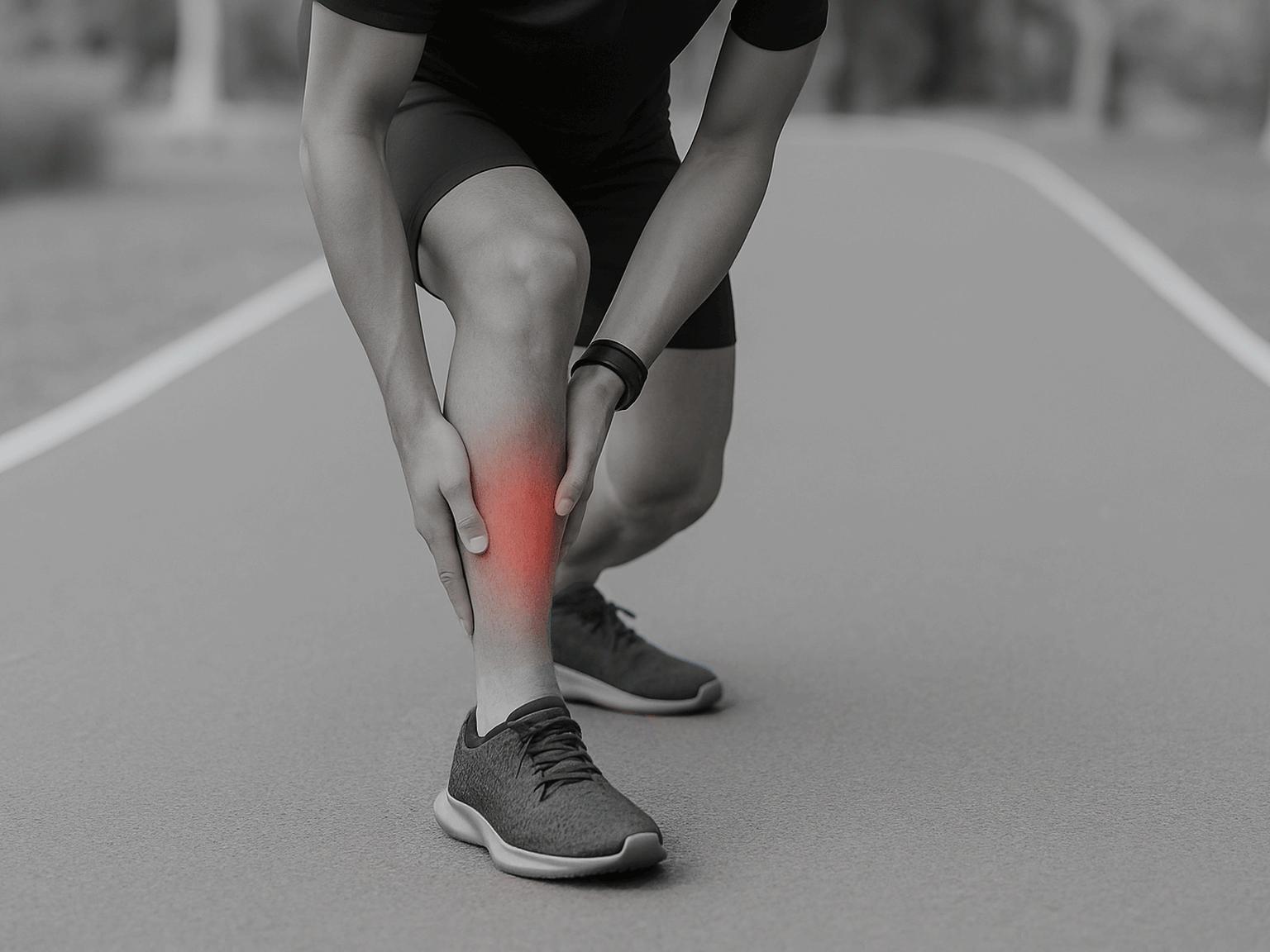
It has a cumbersome name, but many athletes have experienced it: Shin Splints, also known as medial tibial stress syndrome. Shin Splints often occur during physical activities like jogging, football, jump training, or after long marches with heavy shoes.
What are the symptoms of Shin Splints?
Typical for Shin Splints are sharp pains on the inner or outer edge of the shinbone. These often occur at the beginning or during training. Depending on where the pain occurs, a distinction is made between medial or lateral Shin Splints.
What are the symptoms of medial Shin Splints?
The word "medial" comes from Latin and means "middle" or "toward the center of the body." In medial Shin Splints, the pain occurs on the inner edge of the shinbone, usually in the lower two-thirds. The discomfort mainly affects the tendon attachment of the posterior tibial muscle, the Musculus Tibialis posterior (see illustration, right).
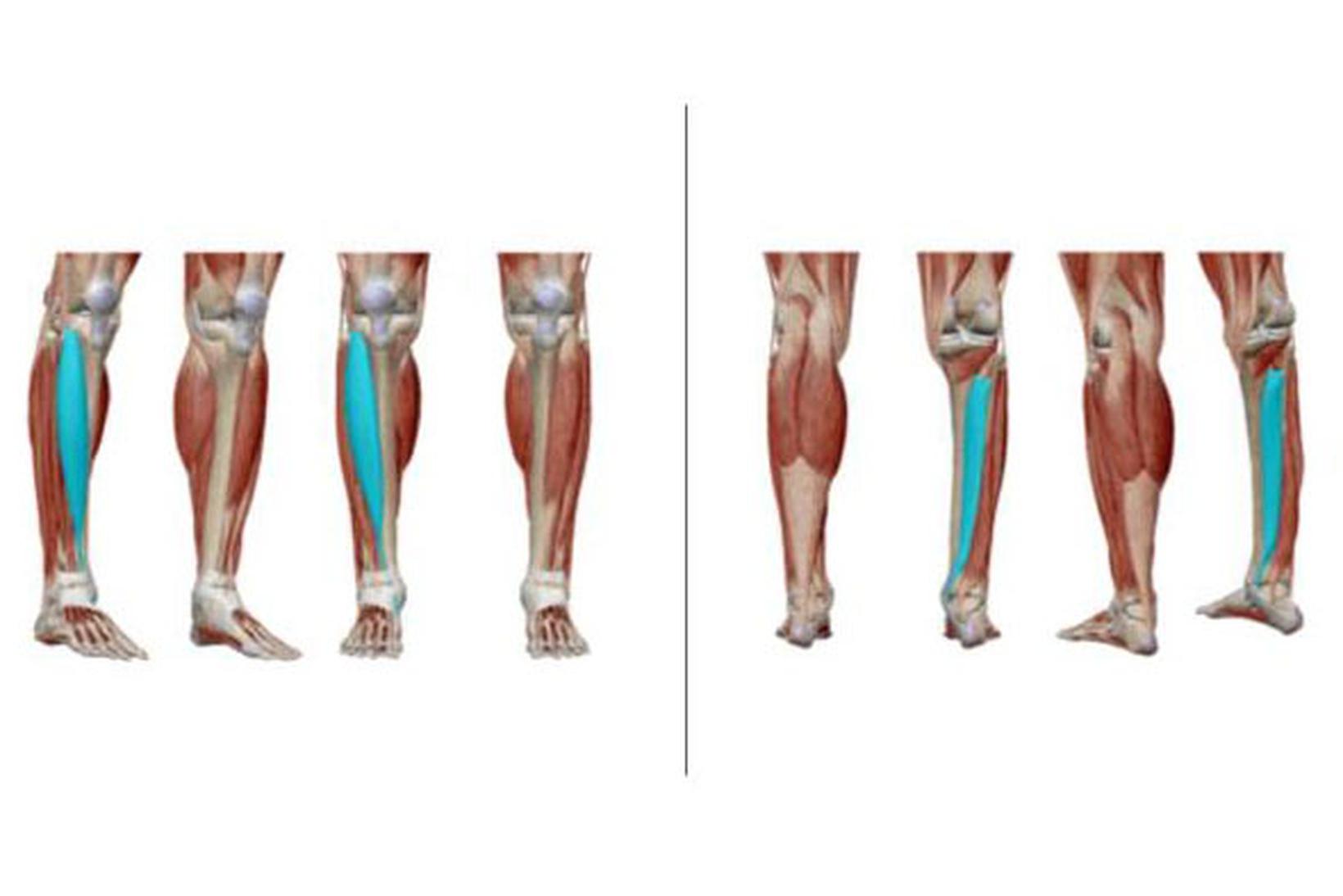
Right: Musculus Tibialis posterior – Affected in medial Shin Splints
Causes of medial Shin Splints
Those suffering from medial Shin Splints often have an unstable midfoot. This means that the longitudinal arch of the foot drops too much, often resulting in what is known as overpronation. This means that the foot rolls excessively inward when walking or running. The posterior tibial muscle then tries to counteract this overpronation but is often overwhelmed, leading to pain on the inner edge of the shinbone.
Treatment of medial Shin Splints
The first measure in treating Shin Splints is to reduce the load. Often, the training volume or frequency needs to be reduced. Stable footwear with a slight drop also provides relief. Shoe insoles can also help by stabilizing the longitudinal arch of the foot. Finally, foot exercises and physiotherapy are important components of treating medial Shin Splints. (Book recommendation: "Good to Walk a Lifetime" by C. Larsen)
Lateral Shin Splints: What are the symptoms?
The word "lateral" comes from Latin and means "side" or "sideways." In lateral Shin Splints, the pain occurs on the outer edge of the shinbone, often in the upper two-thirds. In lateral Shin Splints, the anterior tibial muscle is affected, the Musculus Tibialis Anterior (see illustration, left).
Left: Musculus Tibialis Anterior – Affected in lateral Shin Splints
Causes of lateral Shin Splints
In lateral Shin Splints, the problem often lies in the anterior tibial muscle being overly stressed during foot rolling. Causes of lateral Shin Splints are therefore often long marches with heavy shoes. Here, the muscle must counteract to allow controlled rolling. The anterior tibial muscle is also involved in supination, where the inner edge of the foot is raised, and the outer edge is lowered. Thus, instability of the midfoot can also lead to discomfort here.
Lateral Shin Splints: Tips for Treatment
In addition to the same treatment measures as for medial shin splints, stretching and massaging can also help with lateral shin splints. Stretching or massaging the anterior tibialis muscle is more feasible than the posterior tibialis muscle. Additionally, a support stocking can alleviate the discomfort. If the pain occurs while jogging, it is advisable to land on the midfoot rather than the heel.
What happens if you ignore shin splints?
If shin splints, both medial and lateral, are ignored, the ongoing muscular overload can have serious consequences. The cause of the discomfort is usually due to overuse of the muscles, particularly the posterior tibialis muscle in medial shin splints and the anterior tibialis muscle in lateral shin splints. This leads to increased tension on the interosseous membrane, a fibrous layer that connects the tibia to the fibula. This overload transfers to the periosteum and can cause small tears and inflammation in the tissue.
It is therefore important to recognize the symptoms early and address the muscular overload. A comprehensive Running and Gait Analysis from NUMO is the first step towards a better body awareness.