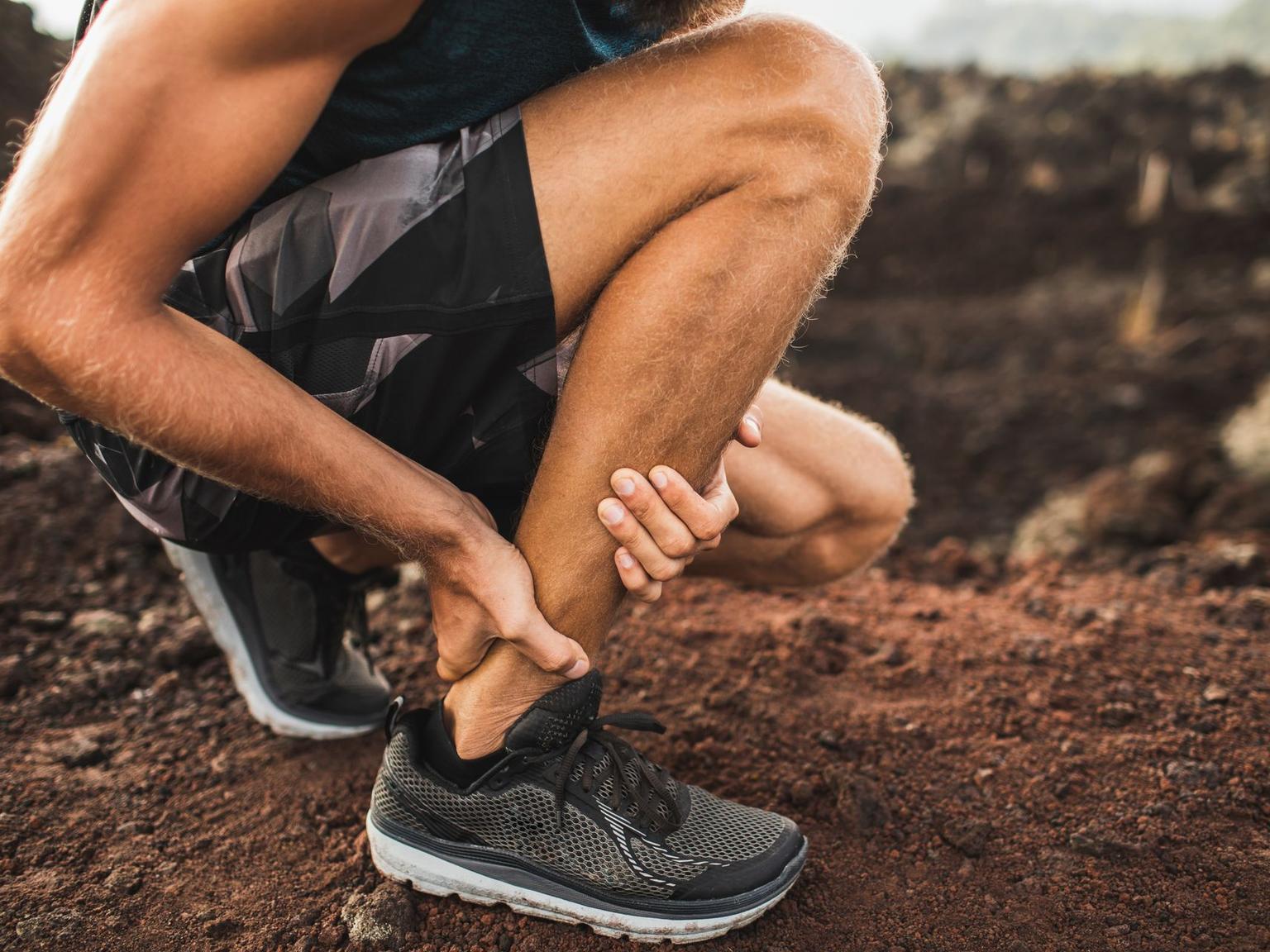
Do you know the story of Achilles from Greek mythology? The legendary hero was considered invincible and had only one vulnerable spot: the heel. Hence, a weak point is referred to as the "Achilles' heel" in modern language. And that's how the Achilles tendon got its name. It is the strongest tendon in our body. Yet, it is prone to injuries and chronic complaints. So strong and yet so weak – the “Achilles' heel” indeed.
The Role of the Achilles Tendon - and Why It Doesn't Always Fare Well
The Achilles tendon connects the heel bone (calcaneus) with the calf muscles and is 15 to 25 centimeters long. It allows for plantar flexion (extension of the foot towards the sole) in the upper ankle joint - for example, when walking during the push-off phase or when standing on tiptoe. Essential here is the transmission of force. The tendon is particularly stressed in sports with multiples of body weight. An overview study found that about six percent of physically active individuals had problems with the Achilles tendon at a given time. How is it that such a strong tendon often causes problems? Various aspects are discussed in the literature:
- Chronic misloads (e.g., caused by incorrect shoes, faulty running style, or muscular imbalances) can irritate the Achilles tendon.
- In cases of overloading (too high intensity or too large training volume), the Achilles tendon cannot withstand the demands and reacts pathologically.
- Repeated microtraumas can lead to damage to the Achilles tendon structure.
- Other factors such as age, gender, diseases, and genetic predisposition are also cited as possible causes of Achilles tendon complaints.
What Are the Possible Measures?
These causes lead to corresponding measures:
- Reduce load: Minimize intensity and training volume, if possible, choose an alternative sport during the duration of the complaints (e.g., cycling instead of jogging, aqua jogging)
- Improve biomechanics: Analyze and improve running technique, use shoe inserts
- Shoe Consultation : Note – stability is more important than cushioning in footwear!
- Consult a doctor for an accurate diagnosis
- Possibly physiotherapy or shock wave therapy
A Lengthy Process - We Help with It
Achilles tendon complaints often build up slowly. Initially, only a starting pain is noticeable. Later, the complaints become more persistent and are also noticeable in everyday life. The Achilles tendon is bradytrophic, meaning it has a very slow metabolism. The nutrition of the tendon occurs through diffusion from surrounding tissue. This means that the healing process is very slow and takes at least three to six months. Regeneration thus becomes a lengthy matter.
It is important to act early and not ignore the complaints for too long, as there is a risk of chronic Achilles tendonitis. Therefore, do not delay measures against the complaints! React in time and come to NUMO. We conduct a Gait or Running Analysis to determine the biomechanics and thus the load on your Achilles tendon in all phases of the step and to find the cause of your Achilles tendon problems. Any deviations can be very well corrected with an individually tailored NUMO Shoe Insert . We also provide advice on suitable footwear and give tips on your running technique.
References
E. Wallenböck, O. Lang, P. Lugner. Stress in the Achilles Tendon during a Topple-Over Movement in the Ankle Joint. Journal of Biomechanics. Sept 1995;28(9).
Wang Y, Zhou H, Nie Z, Cui S. Prevalence of Achilles Tendinopathy in Physical Exercise: A Systematic Review and Meta-Analysis. Sports Med Health Sci. 2022;4(3):152-159. Published 2022 Mar 28. doi:10.1016/j.smhs.2022.03.003
Karin Grävare Silbernagel, Shawn Hanlon, Andrew Sprague; Current Clinical Concepts: Conservative Management of Achilles Tendinopathy. Journal of Athletic Training. 1 May 2020; 55 (5): 438–447. doi: https://doi.org/10.4085/1062-6050-356-19
M. Wünnemann, D. Rosenbaum. Chronic Tendinopathy of the Achilles Tendon - A Multifactorial Complaint Picture. German Journal of Sports Medicine. 2009; 60(11): 339-344. Available online: https://www.germanjournalsportsmedicine.com/archive/archive-2009/issue-11/chronic-tendinopathy-of-the-achilles-tendon-a-multifactorial-complaint-picture/
Leadbetter WB. Cell-Matrix Response in Tendon Injury. Clinics in Sports Medicine. 1992 Jul;11(3):533-78. PMID: 1638640.
Magnan B, Bondi M, Pierantoni S, Samaila E. The Pathogenesis of Achilles Tendinopathy: A Systematic Review. Foot Ankle Surgery. 2014 Sep;20(3):154-9. doi: 10.1016/j.fas.2014.02.010. Epub 2014 Mar 12. PMID: 25103700.
L. Weisskopf. Achilles Tendon Pathologies. CME Publishing. Available online: https://www.cme-kurs.de/kurse/achillessehnenpathologien/ [Last accessed on 27.02.2024]