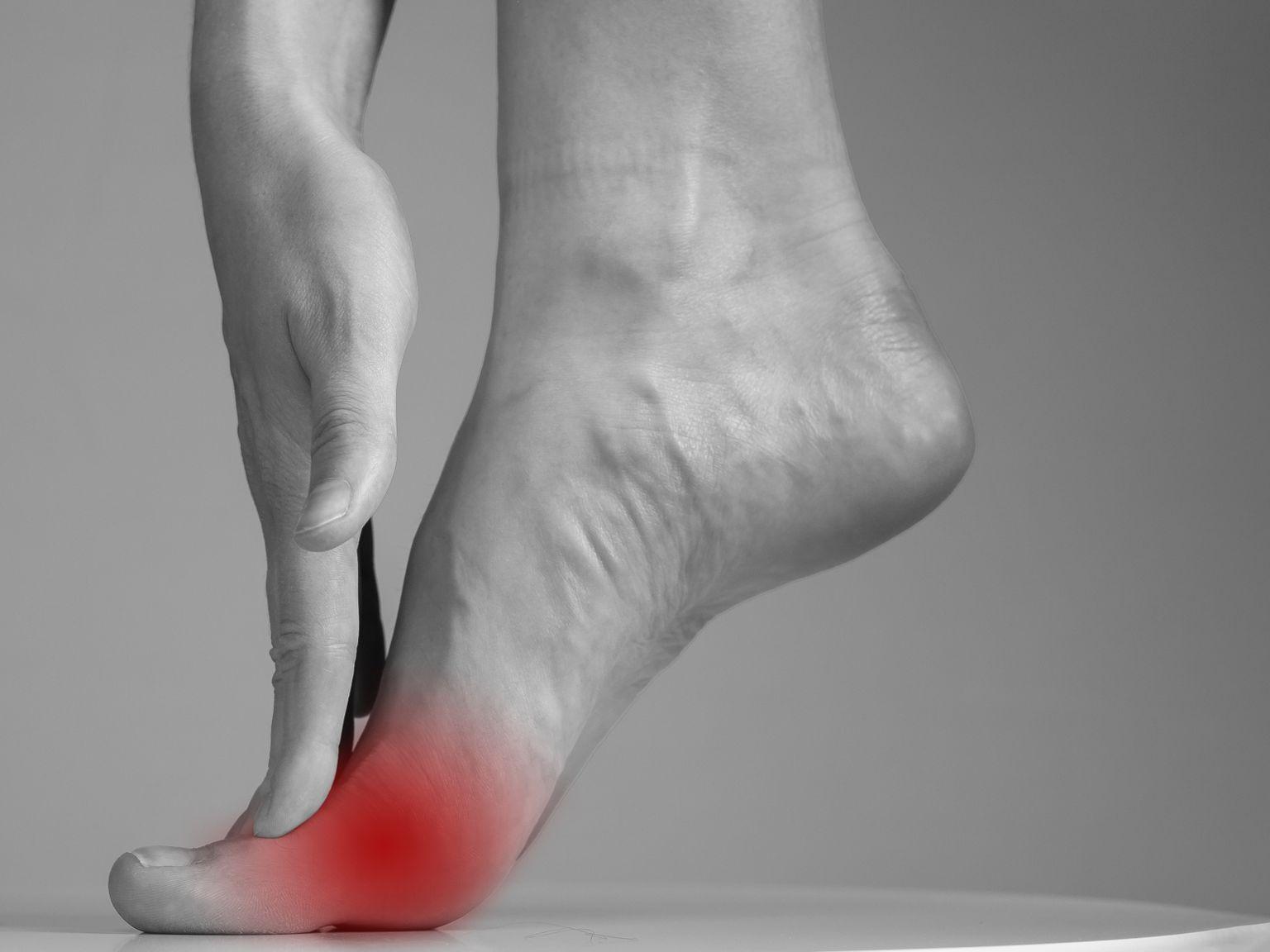
Common forefoot complaints include hallux valgus, tailor's bunion, hammer or claw toes, Morton's neuroma, or pain in the sesamoid bone or under the heads of the metatarsals. Today, we will focus on the latter. We will address the other mentioned problems in future articles.
Symptoms of Forefoot Complaints
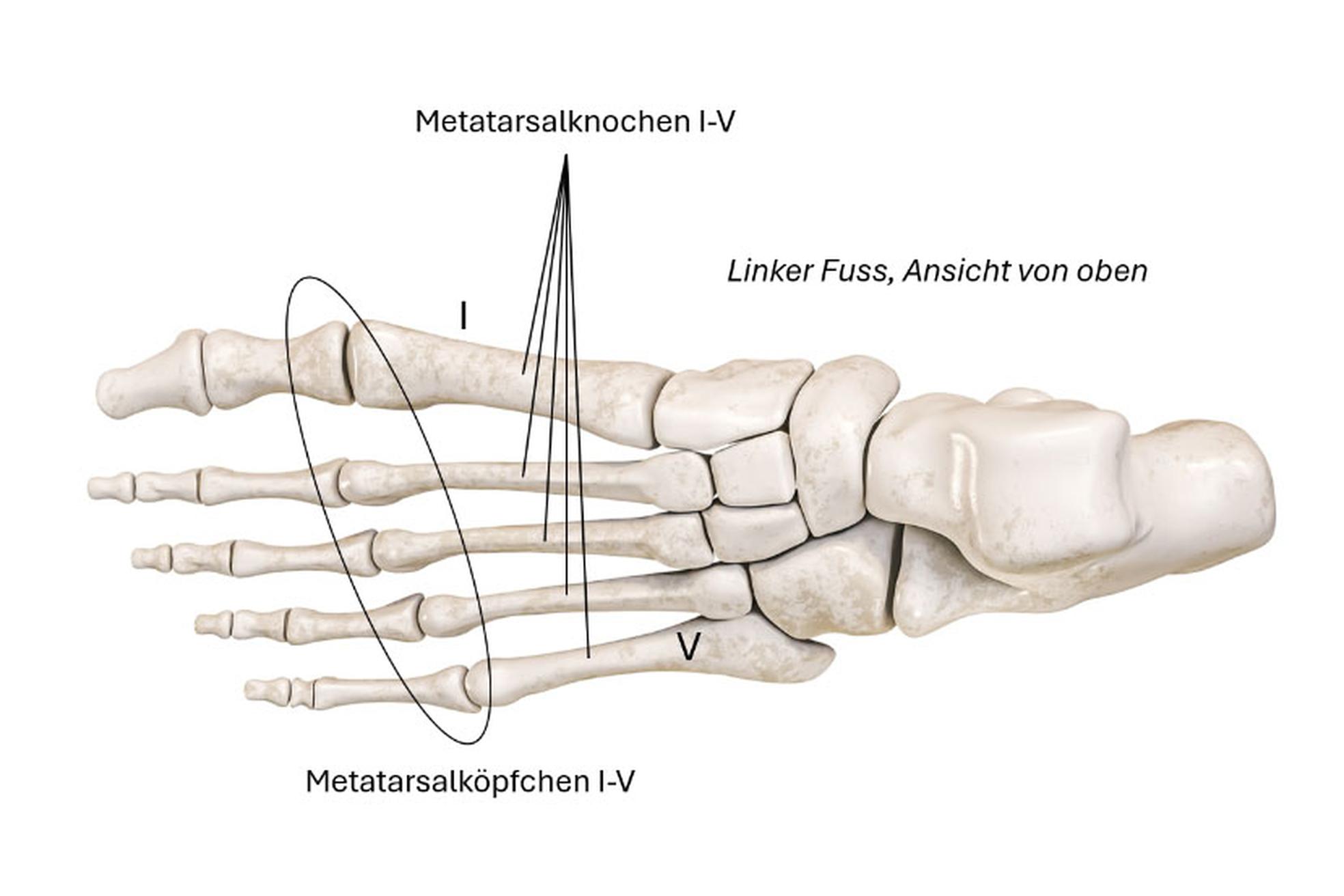
The technical term for complaints in the area of the metatarsal heads is metatarsalgia (from Greek Metatarsus "midfoot" and algos "pain"). It particularly involves an overload of the second, third, or fourth metatarsal ray. The body usually responds to this overload by forming increased callus (= hyperkeratosis). Painful pressure points may develop. Sometimes, there are also radiations into the toes or sensory disturbances such as tingling or numbness.
Where Do the Pains in My Forefoot Come From?
There are various possible causes for metatarsalgia: reduced fat tissue that serves as a cushion under the metatarsal heads, toe and foot deformities, or rheumatic diseases. For example, if an existing hallux valgus prevents adequate loading of the big toe joint, causing the second and third metatarsal heads to be heavily loaded and thus painful, it is called transfer metatarsalgia. The cause can also be simple overload, caused by too long a loading time and/or too high peak loads.
What Can Be Done Against Forefoot Pain – Our Recommendation
If you are diagnosed with metatarsalgia, come to NUMO. It is important to relieve the painful areas. The professional world is not always in agreement on how this should be done. In principle, there are four options.
First, it is important to understand that the load on the forefoot, viewed over the entire gait cycle, is highest during the push-off phase. The duration of the push-off phase (time from heel lift to foot lift) extends over approximately 50% of the entire stance phase when walking. It is therefore obvious that the focus in the treatment of metatarsalgia must be in this area.
A Shoe with a Stiff Sole Plus Good Rolling Motion
The choice of shoe plays a crucial role. A shoe with a stiff sole reduces peak pressure in the forefoot compared to a shoe with a flexible sole. At the same time, the shoe sole should not only be stiff but also have sufficient rolling motion. This supports the rolling process and reduces the point pressure in the forefoot.
An Orthopedic Insole with Retrocapital Support
There are quite a few controversial discussions surrounding retrocapital support (elevation behind the metatarsal heads). For example, the literature states that retrocapital support supports the transverse arch of the foot. However, the view that such a transverse arch even exists is now outdated. Retrocapital support can reduce pressure in the forefoot. It is important that it is really behind and not under the metatarsal heads, otherwise, it causes additional problems. Relief through retrocapital support is only possible in the stance phase. For an effect during push-off, it would have to be so enormously high that the insole can no longer be comfortably worn.
Soft Padding of the Entire Forefoot
A similar pressure relief in the forefoot as with orthopedic insoles with retrocapital support can also be achieved through soft padding of the entire forefoot. It has approximately the same effect as retrocapital support.
Targeted Relief of the Painful Area
Targeted relief of the painful area is achieved in two ways: on the one hand, the area is relieved with softer materials, and on the other hand, adjacent regions are deliberately loaded more. The advantage over soft padding of the entire forefoot is that the shoe insert does not have to be particularly thick, and any further corrections in the forefoot can be better implemented.
NUMO Finds the Best Solution for You
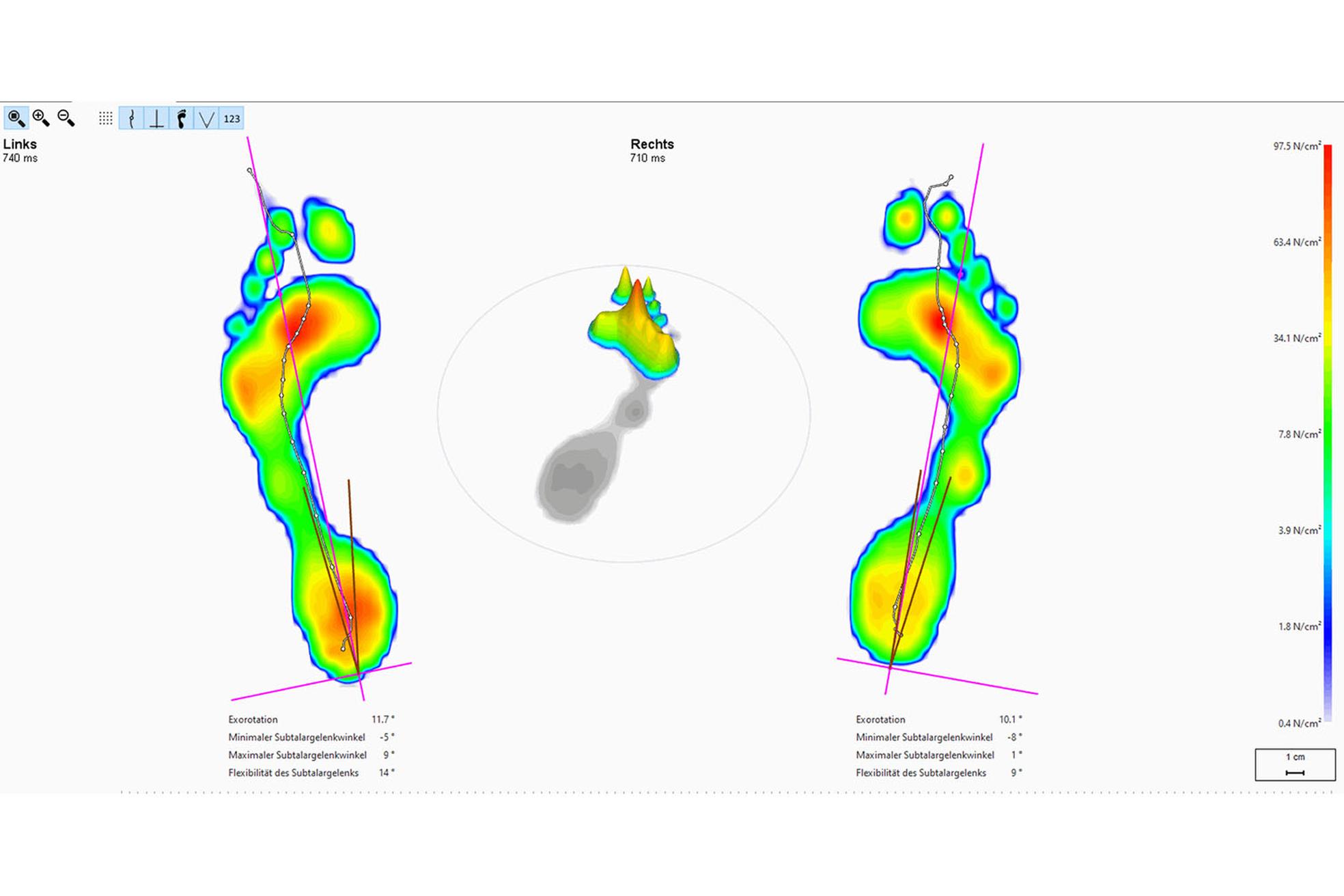
Of course, combinations of the above measures are possible and sensible. At NUMO, we provide individual advice and pay attention to when you wear the shoe inserts: while standing, during sports, or while walking. Using dynamic pressure measurement and palpation, we can locate the pain point and accordingly build the Shoe Insert for you. And even if everything doesn't fit perfectly on the first try, we won't leave you alone and will keep at it. At NUMO, you have a three-month warranty on your insert. During this time, any adjustments to the insert are free of charge for you.
References
Huang C, Fukushi K, Wang Z, Nihey F, Kajitani H, Nakahara K. Method for Estimating Temporal Gait Parameters Concerning Bilateral Lower Limbs of Healthy Subjects Using a Single In-Shoe Motion Sensor through a Gait Event Detection Approach. Sensors (Basel). 2022;22(1):351. doi:10.3390/s22010351
Baur, H, Merz, N, Muster, A, Fluckiger, G, Hirschmuller, A. Forefoot Relief through Shoe Inserts: Effects of Different Construction Principles. Journal of Rheumatology, 2018;77(3):231-239. Springer Medical Publishing. doi:10.1007/s00393-017-0347-8
Gabel M, Ziegler A. The Purpose of the Retrocapital Pad in Insole Supply. OUP, 2016;12:692-695. doi:10.3238/oup.2016.0692–0695